Raising maths attainment in a federation of schools
How partnership with a Maths Hub helped schools in an area of deprivation see maths results rise year-on-year
06/03/2026
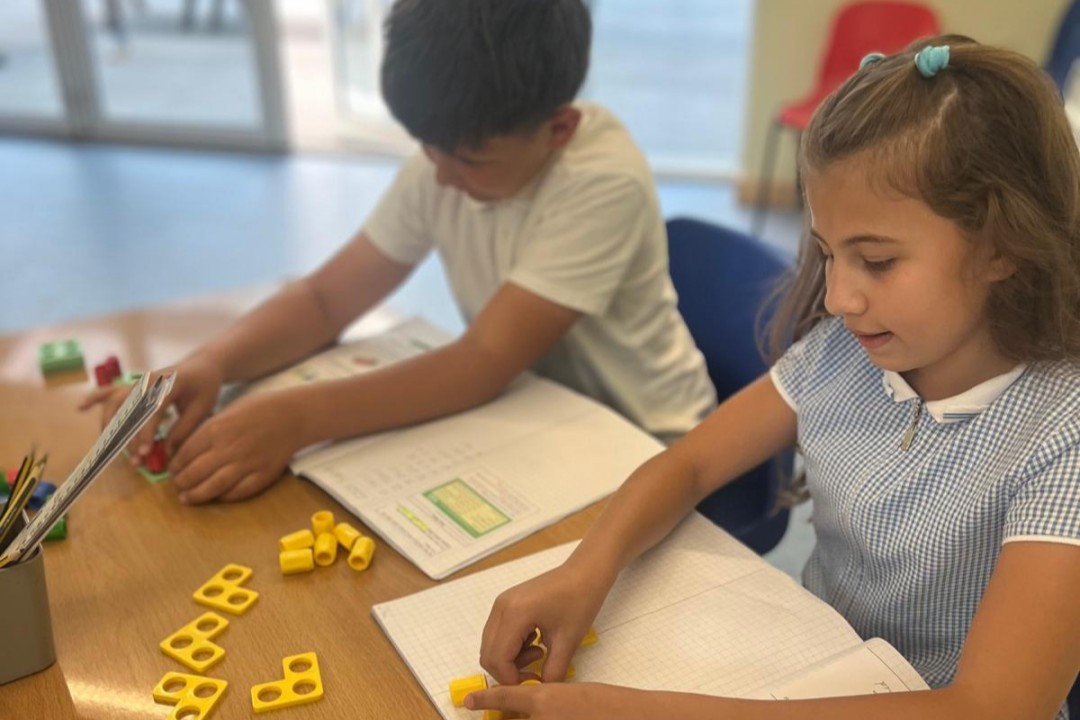
Kerran Harwood is Chief Operating Officer for Spirit Federation, a group of four primary schools based in Peterborough. She is also a Headteacher Advocate with Cambridge Maths Hub. We hear from her about the personal and professional benefits of her role and how her federation has seen maths outcomes soar since they started working with the Maths Hub.
How did you first get involved with Cambridge Maths Hub?
In my first year at a new school in Peterborough, in 2016/17, a colleague attended some Work Groups with Cambridge Maths Hub. When she came back, she said they were looking for more people to lead CPD. I have a maths degree and had led CPD previously, and I’d worked in middle schools in Northamptonshire for 15 years, so I got in touch.
I started leading a Teaching for Mastery Work Group in 2018/19 and completed the NCETM Professional Development Lead Programme. It gave me a lot of insight into models of professional development beyond staff meetings. I subsequently led CPD programmes for teachers and teaching assistants, as well as Mastery Readiness Work Groups [now Teaching for Mastery – Introductory].
Why did you become a Headteacher Advocate for the Maths Hub and what does it involve?
I took a year out from working with the hub when I was asked to be interim headteacher for my school. When I returned, the hub asked me to become a Headteacher Advocate. I’ve been in education for 25 years, as a deputy head, headteacher, and now Chief Operating Officer across four schools. So, as a Headteacher Advocate, Cambridge Maths Hub can draw on that leadership experience.
The role has evolved over time. Initially, I visited schools and shared insights informally. Now, it’s a much bigger role. I work closely with the Maths Hub to organise events for headteachers, especially those receiving Targeted Support in Mathematics. They come to our schools to see teaching for mastery in action and discuss strategic implementation.
I’ve also shared our federation’s journey – from combined Maths and Literacy scores for age-related expectations (ARE) in the 20s and 30s to now being in the 80s and 90s. Teaching for mastery isn’t solely responsible, but it’s had a major impact.
You’re a senior leader in your federation – why is your work with the hub so important?
I love the different roles I now have with the federation and the Maths Hub. Spirit Federation have been so supportive. After 15 years teaching in Northamptonshire, I had felt stuck. Then I came to Peterborough, and the Executive Head at St John’s Church School and Winyates gave me countless opportunities to grow as a leader and a professional. She really encouraged and valued my work with the Maths Hub. I’m really grateful to have walked into her school that day.
Education is my passion. I spent 20 years in the classroom and five years out of it, and I do miss teaching. From early in my career, I’ve supported new teachers, including when I was an NQT mentor – I’ve always been interested in helping teachers grow. The Maths Hubs Programme brought together my love for maths and teaching. And I’m constantly learning too. Every conversation and collaboration helps me grow professionally.
What’s it like to teach in Peterborough and what challenges do schools face?
Historically, outcomes at Key Stage 2 in Peterborough have been below the national average, but they have seen steady and encouraging improvement over recent years. It’s a city of contrasts – there are pockets of affluence and of significant deprivation. Across Peterborough, schools face challenges like high pupil mobility and falling birth rates, which reduce budgets and can limit CPD opportunities. That’s why we emphasise that Maths Hub support is fully funded.
In our federation schools, particularly those serving high-deprivation communities, we see the impact of those pressures. Parents are generally positive and value that their children are happy and learning. However, we do not depend on parents to practise times tables at home, for example, because we understand the pressures they face.
Despite that context, outcomes in our schools have improved significantly.
What improvements have the schools in your federation seen since working with Cambridge Maths Hub?
At Barnack Primary, when we began working with them in 2020, their combined KS2 score was 64% of pupils achieving ARE in Maths and Literacy. Their three-year average is now 96%. This year, they achieved 95% at ARE in maths, with 60% at greater depth.
St John’s, which serves a high-deprivation community, has a three-year average of 90% at ARE. This year, they had 91% in maths and 24% at greater depth.
Winyates Primary, also in an area of high deprivation, has an average of 87% at ARE over three years. Their maths result this year was 82%, with 36% at greater depth.
Paston Ridings Primary joined us more recently. In 2023, their combined score was 40%. This year, it’s 76%, with 84% in maths and 29% at greater depth. They’ve had Targeted Support in Mathematics (Intensive) to help build capacity and lay strong foundations for improving maths teaching and learning, and an experienced Intensive Support Partner (ISP) from the Maths Hub also worked with them.
The headteacher at Paston Ridings welcomed the support – she was excited to build capacity and expertise. They have now hosted Work Groups, welcoming teachers from other schools into their classrooms, and have opened their doors to Early Career Teachers taking part in the SKTM (Specialised Knowledge for Teaching Mathematics) Programme. It’s been a real journey of growth and collaboration.
What benefits does having local leaders of mathematics education (LLMEs) in your federation have?
The additional professional development has been a huge benefit. All our LLMEs are part of our maths team, with one maths lead in each school. Their involvement in LLME discussions improves the quality of CPD we deliver in school.
When they come back from Work Groups and network meetings, they bring that thinking into our federation maths meetings. It sharpens our professional dialogue. We recently talked about how to teach division of fractions by integers, and it prompted us to revisit and improve our approach. That kind of subject-specific discussion means we are constantly refining what we do, rather than just repeating the same practice year after year.
One of our LLMEs is an Early Years specialist. Maths has always been her safe space, but this role has massively boosted her confidence. She was able to make an important contribution during our recent Ofsted inspection, where Winyates received Outstanding in every area. The feedback from Ofsted about the journey she had been on was overwhelmingly positive.
So it’s not just about improving lessons. It’s about growing people as leaders. That, in turn, strengthens the quality of teaching across the federation.
What impact does a teaching for mastery approach have on staff and pupils?
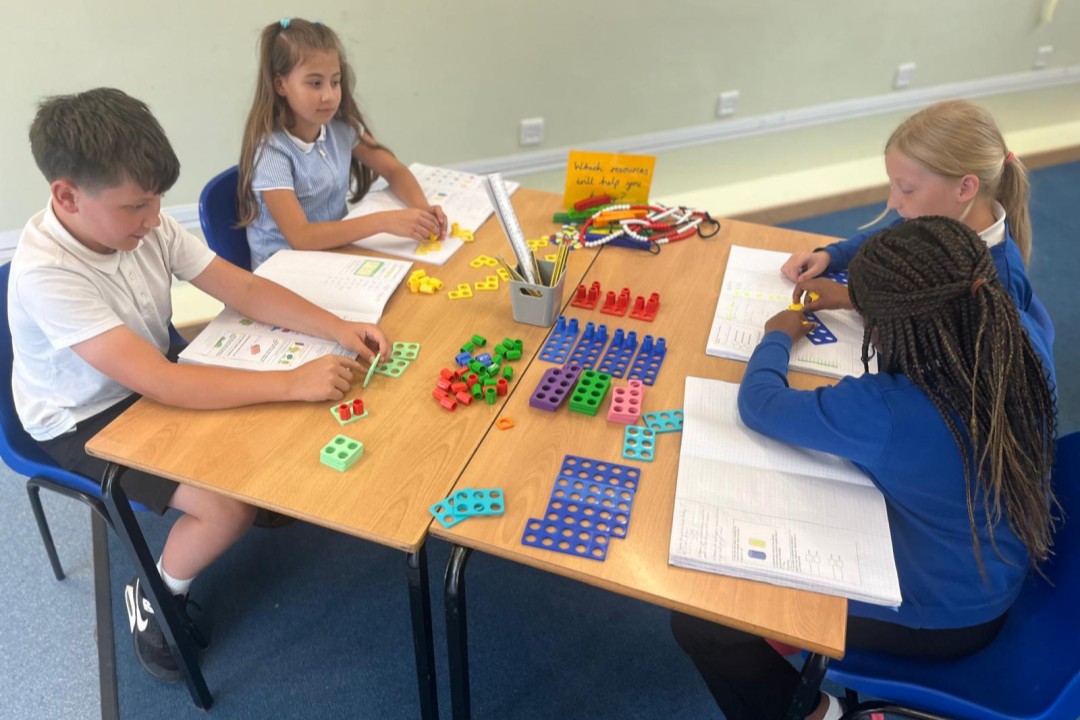
It builds subject knowledge, which boosts confidence both for teachers and teaching assistants. That leads to improved delivery, greater willingness to try new approaches, and better understanding of what pupils need next. It’s also built resilience and reasoning skills in pupils. We see high engagement and enjoyment in maths. Lessons are inclusive – with the right scaffolds, children with SEND learn alongside their peers. We focus on depth before acceleration and make sure all pupils feel successful, including those with EHCPs.
What makes the Maths Hubs model so effective?
It’s the fact that engagement is sustained. That’s really crucial to its success. If schools stay involved, they will see the impact over time. It’s also collaborative and is teacher led, with Work Group Leads still teaching in the classroom. That makes it much more credible. The Maths Hubs model also builds strong professional networks. Headteachers can hear from colleagues in other schools who understand their role, as can classroom teachers. It’s not just about learning something once; it’s about embedding effective approaches and sharing that across a community.
What would you say to school or trust leaders who are unsure about engaging with the Maths Hub?
Do it! It won’t just be another thing on your to-do list – it can become part of your school culture. Developing and supporting teachers really is key to retention. The Maths Hub supports teachers’ subject knowledge and pedagogy, which benefits pupils and it builds leadership capacity. It’s free, high-quality CPD led by current practitioners.
School improvement is never finished. A partnership with the Maths Hub keeps schools connected to new research, evolving priorities and fresh thinking. It sustains momentum and ensures maths stays a strength over time. Why wouldn’t you get involved?
Engage with your local Maths Hub
Inspired? Find your local Maths Hub and see how sustained support can strengthen maths teaching and improve outcomes in your school or trust
Find your hub